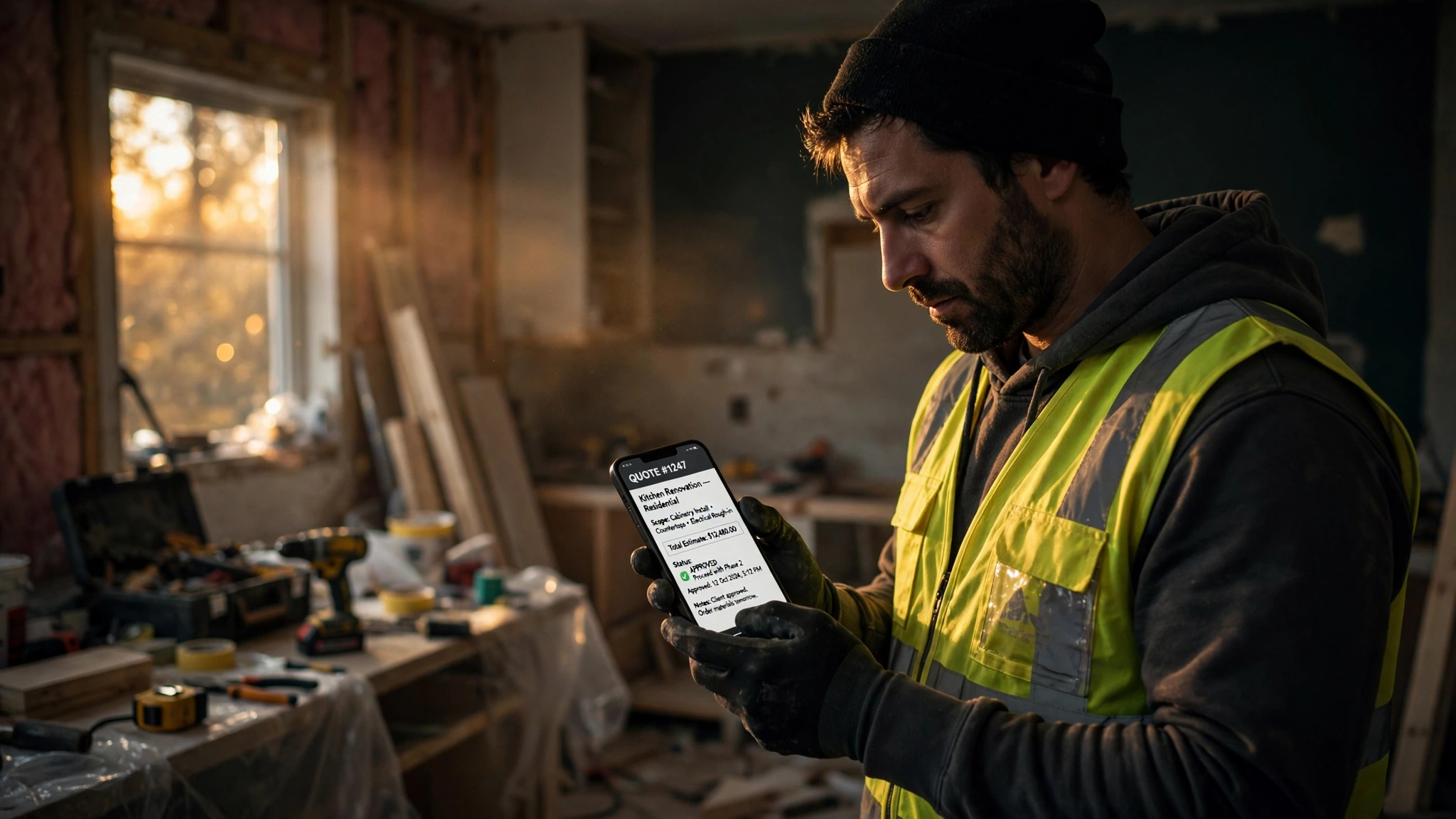
You spent an evening on that quote. You measured, priced the materials, thought through the schedule, and sent it off. Then nothing. No yes, no no, no "can you come down a bit." Just quiet.
I spent 20 years as a carpenter and project manager, so I know how much work goes into putting a quote together. Silence doesn't always mean the customer has said no. A short follow-up can start the conversation again.
Why quotes go quiet
A homeowner asking for a quote is usually doing it alongside a job, kids, and two or three other contractors. A few things tend to happen:
- They meant to reply and the message slid down the list.
- They have a question they don't want to ask, such as whether the price is flexible or what is included.
- They are waiting on a partner, a bank, or another quote before deciding.
- They were never sure what the next step was, so they did nothing.
A short, friendly follow-up gives the customer a chance to tell you what's holding them up.
A follow-up routine you can run in five minutes a day
You don't need software to start. You need a list and a rhythm.
1. Keep one list of open quotes
Name, job, amount, date sent, and the date you will follow up. A notes app or a spreadsheet is fine. If a quote isn't on the list, it will be forgotten.
2. Ask for the decision date when you send it
Put one line at the bottom: "When would you like to have this decided by?" Now your follow-up isn't pushy. You are checking in on a date they gave you.
3. Follow up in two or three days with a question, not a chase
Compare these two messages.
"Just checking if you got my quote?"
"Hi Sarah, I wanted to see if you had any questions about the deck quote. Happy to walk through the materials or adjust the scope if that helps."
The second one gives them an easy reason to reply and shows you care about getting the job right.
4. Follow up again at a week, then close the loop
A second nudge a week later is normal. After that, send a polite last message: "Hi Sarah, I'll close the loop on this quote for now, but I'm happy to answer any questions if you're still considering the work." It gives the customer room to reply and keeps the door open.
5. Write down why you won or lost it
One line per quote is enough. After a month you will see patterns: the jobs where you are too slow to respond, the ones where price is the issue, the ones that always say yes.
Follow-up only works if people can find you and reach you
A good follow-up routine fixes the end of the process. The start matters too. If your website doesn't tell people what you do and where, or if enquiries land in three different places, quotes get lost before you ever send them. That is why quote follow-up is one lesson in a bigger picture: a website that makes sense, being found on Google, handling new leads quickly, following up on quotes, and cutting down the paperwork.
Take the free Booked Solid course
I put those five areas into a free course for tradespeople called Booked Solid. It is five practical lessons, about 70 minutes in total, covering:
- Your website
- Getting found on Google
- Lead handling
- Quote follow-up
- Using AI for paperwork
You also get workbooks, a toolkit, and a seven-day action plan so you can put something in place this week, not someday. Finish the course and you can book a free 20-minute review with me.
Start the free Booked Solid course here.
Whether you take the course or not, do one thing today: open your last ten quotes, find the ones nobody answered, and send two of them a friendly question. You already did the hard part when you wrote the quote. Don't leave it sitting there.
